The Countdown Begins: Why My New Novel and Its Stunning Cover Will Keep You Guessing

There is a special kind of excitement that comes with the final stretch before a novel release. The pages are written. The edits have been wrestled into place. The characters have said what they needed to say, even when they surprised me. And now, at last, the book is starting to feel real in a way that makes my heart beat a little faster.
I have been waiting to share this story with you.
Not in the vague, polite way authors say when a project is almost ready. I mean I have actually imagined the moment readers begin turning the first pages. I have pictured the theories, the raised eyebrows, the late-night “just one more chapter” promises that may or may not be kept. I have wondered which twist will make someone stop and reread a sentence. I have wondered which character will earn trust, lose it, or make readers question whether they ever really knew them at all.
And then there is the cover.
Oh, the cover.
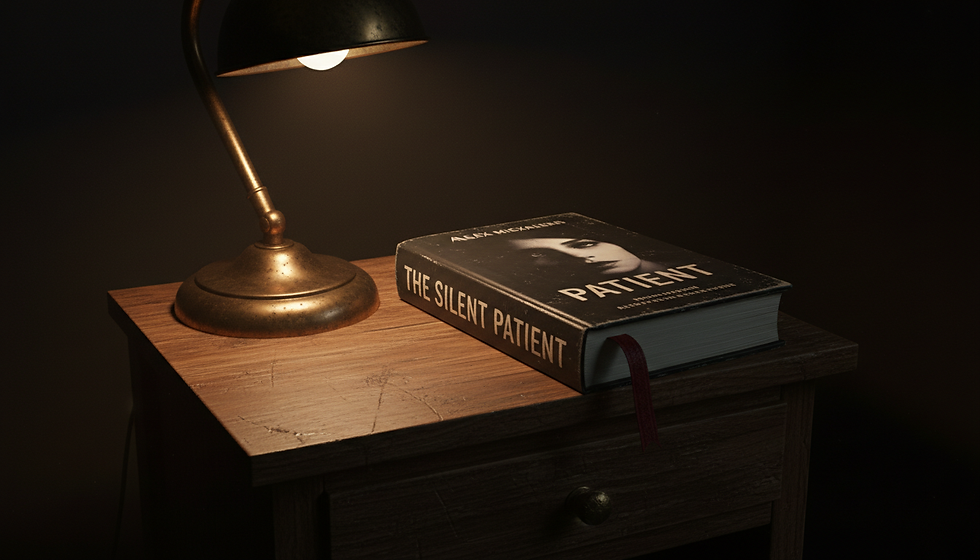
I know we are told not to judge a book by it, but let’s be honest. A great cover is the first whisper of the story. It is the hand reaching out from the shelf. It is the mood before the first line. This one captures the pulse of the novel so well that every time I look at it, I feel that same spark I felt when the idea first arrived.
The countdown has begun, and I cannot wait for you to step inside this world.
The cover tells its own story before page one
A book cover has a difficult job. It has to invite readers in without giving too much away. It has to reflect the story’s mood, but still leave room for curiosity. It has to hint, not explain.
This cover does exactly that.
What I love most is how it carries a sense of tension. There is beauty in it, yes, but also unease. It feels like something has just happened, or something is about to happen, and the viewer has arrived a second too late to understand it. That is the feeling I wanted from the beginning.
The story itself lives in that space between what people show and what they hide. On the surface, things may seem clear. A choice looks simple. A relationship seems steady. A memory feels reliable. Then the light shifts, and suddenly everything looks different.
That is why the cover matters so much to me. It is not only decoration. It is a promise.
It says:
Pay attention.
Nothing here is accidental.
The truth may be closer than you think.
The first answer is rarely the final one.
I also love that the cover leaves space for readers to bring their own questions to it. I do not want someone to see it and think they know the whole story. I want them to pause. I want them to wonder what they are looking at. I want them to feel the pull of a mystery opening just wide enough to step through.
A strong cover should feel like a doorway, and this one does. It leads toward the tone of the novel without handing over the map.
The story is built on twists that change what came before
I have always loved stories that make me reconsider what I thought I knew. Not just stories with shocking reveals, although those are fun, but stories where each new piece changes the shape of the whole story.
That is the kind of experience I wanted to create here.
The twists in this novel are not dropped in for noise. They grow out of character, choice, fear, loyalty, and the quiet things people do when they think no one is watching. Some turns are sharp. Others are subtle. Some may arrive with a clap of thunder. Others may land softly, then echo later when their meaning becomes clear.
One of my favorite parts of writing this book was playing with what the reader knows compared to what the characters know. Sometimes the reader is ahead. Sometimes the characters are hiding something in plain sight. Sometimes everyone, including the person telling the truth, may be missing the most important clue.
That push and pull creates the kind of suspense I love most.
The story asks questions like:
What if the person you trust most has left something out?
What if a past event was misunderstood from the start?
What if the danger is not where everyone is looking?
What if the smallest detail is the one that matters?
I do not want to give away too much, of course. That would ruin the fun. But I can say this: the book is designed so that each reveal does more than answer a question. It opens a new one.
That is where the momentum comes from. Each chapter carries a thread, and when one thread tightens, another begins to loosen. The goal was never to confuse readers. The goal was to keep the ground shifting just enough that every answer feels earned.
My writing process starts with questions, not answers
People often ask whether I outline everything before I write or discover the story as I go. The truth is somewhere in the middle.
I usually begin with a feeling. For this novel, it was the feeling of standing in a room where everyone knows something, but no one is saying the full truth. From there, I started asking questions.
Who is most afraid of the truth coming out?
Who believes they are doing the right thing?
Who is lying to protect someone else?
Who is lying to protect themselves?
Those questions became the bones of the story.
I did create somewhat of an outline, but I like my outlines to leave room for trouble, so most of the time, it's disregarded. If everything is locked too early, the story can start to feel stiff. Characters need space to surprise me. A scene may begin with one purpose and end by revealing something I had not expected. When that happens, I pay attention.
Some of the best suspense comes from listening to those surprises.
I also revise with structure in mind. The first draft is about discovering what the story wants to be. The later drafts are about shaping that discovery so the tension builds with purpose.
During revision, I ask myself:
Does this scene raise a question?
Does it reveal something meaningful?
Does it change the reader’s understanding?
Does it push the character into a harder choice?
Is the suspense emotional, not just plot-based?
That last question matters. Suspense is not only about what happens next. It is about why it matters. A locked door is mildly interesting. A locked door with someone’s future behind it is a different thing entirely.
Building suspense is really about control
Suspense depends on timing. Reveal too much too soon, and the tension fades. Hold everything back for too long, and readers may feel shut out. The trick is to give enough light to keep moving, but enough shadow to keep wondering.
I think of it almost like guiding a camera.
In one scene, the lens may focus tightly on a character’s face as they hear something they were not meant to hear. In another, it may pull back so the reader sees the larger danger forming in the background. A small object may enter the frame early, then return later with a very different meaning.
That kind of visual thinking helps me shape the book.
When I write, I often imagine how a scene would look on screen. Where would the camera linger? What would the silence feel like? What would the character notice first? What would the audience notice before the character does?
That is one reason I hope readers will picture this story vividly as they read. I want the scenes to feel immediate. I want you to see the dim hallway, hear the phone buzz at the wrong moment, catch the flicker in someone’s expression when a name is mentioned. I want the story to play behind your eyes like a film you cannot pause.
The goal is not to make the book feel like a screenplay. Novels can go places a camera cannot. They let us sit inside doubt, guilt, longing, and fear. But when prose has a strong visual rhythm, every scene can feel closer, sharper, and more alive.
That is the experience I was chasing: a story you read, but also one you can almost watch.
The secrets are hidden in plain sight
Every suspenseful story has secrets. The fun is deciding where to hide them.
Some secrets in this novel sit beneath the surface, waiting for the right moment. Others are right there from the beginning, dressed up as ordinary details. A line of dialogue. A remembered sound. A glance that lasts too long. A decision that seems natural until later, when it begins to feel suspicious.
I love that kind of hidden sensory.
There are surprises in this book that I hope catch readers off guard. There are also moments I hope make readers think, “Wait, was that clue there the whole time?” Because yes, in many cases, it was.
That is one of the most satisfying parts of writing suspense. The reveal should feel surprising, but not random. When readers look back, the path should be visible. Maybe not obvious, but present. A good twist should make the story feel bigger, not cheaper.
I also wanted the secrets to carry emotional weight. A hidden truth matters more when it changes relationships. A surprise lands harder when it forces someone to face what they have avoided. The plot may keep readers turning pages, but the characters are what make each turn matter.
So yes, there are secrets.
There are surprises.
There are moments when trust becomes complicated, when memory becomes slippery, and when the truth comes with a cost.
And no, I am not telling you which character to watch most closely. Where would be the fun in that?
This release feels personal because of the readers waiting for it
Writing can be a lonely process. A lot of it happens quietly, in stolen hours, in messy drafts, in moments of doubt, and in small breakthroughs no one else sees. There are days when a chapter finally clicks, and there are days when one sentence seems to fight back for an unreasonable amount of time.
Then readers show up.
A kind message. A comment of encouragement. A note asking when the next book will arrive. A conversation about a favorite character or a plot turn from a previous story. Those moments reach farther than you may realize.
They remind me that the book will not stay mine forever.
Soon, this novel will belong to everyone who reads it. Each reader will bring their own fears, hopes, guesses, and life experience to the page. Someone may love a character I worried was too flawed. Someone may catch a clue I thought was well hidden. Someone may read late into the night and then blame me the next morning, which I will accept with gratitude.
That is the beautiful exchange at the heart of publishing. I write the story, but readers complete the experience.
Your support has made this countdown feel even more exciting. Every bit of anticipation, every shared bit of enthusiasm, every “I can’t wait” has added to the joy of this moment. I do not take that for granted.
The wait is almost part of the story now
There is something wonderful about the days before a book release. The story is finished, but the conversation has not started yet. The cover is out in the world, but the pages are still waiting. The clues are set. The secrets are sealed. The twists are ready to do what they were built to do.
It feels like standing outside a theater just before the lights go down.
Soon, the curtain will lift.
Until then, I will be here, equal parts nervous and thrilled, counting down with you. I hope the cover catches your eye. I hope the opening pages pull you in. I hope the twists make you question everything in the best possible way. Most of all, I hope the story stays with you after you close the book.
Thank you for being part of this journey, for cheering it on, and for making the release feel like something worth celebrating. The countdown has begun, and I cannot wait for you to discover what has been hiding in the shadows all along.

Comments